Where this page fits, and related pages
This page is one of a series on debt collection. For the overall picture, please see the central page below.
▶ Debt Collection in Japan|An Overview of Prescription, Procedures and Enforcement
Related pages on the same subject
- Attaching Accounts Receivable in Japan|Method, Advantages and Drawbacks
- Recovering Accounts Receivable in Japan|Warning Signs, First Steps, the Order of Remedies and Prevention
- Interference with Trade and Business in Japan|Unfair Competition, Tort and the Remedies Available
- Evicting a Tenant in Arrears in Japan|Proceedings, Injunction and the Execution Officer
- Recovering Rent Arrears in Japan|Termination, Demand, Guarantors and Enforcement
- Claims in Tort under Japanese Law, and How the Money is Actually Recovered
- Non-Performance of an Obligation under Japanese Law|Specific Performance, Damages and Termination
You hold a judgment against a company or an individual in Japan and still nothing is paid. The most direct remedy is to attach the money the debtor keeps with a bank or a credit union. Japanese law treats this as a form of execution against claims; the procedure is not elaborate and can be completed within a few weeks. Yet everything turns on one question — whether there was in fact a balance in the account on the day the attachment order was served on the bank. What follows explains the procedure, the investigation and the judgment of timing, under Japanese law.
What is attached, and who the third-party obligor is
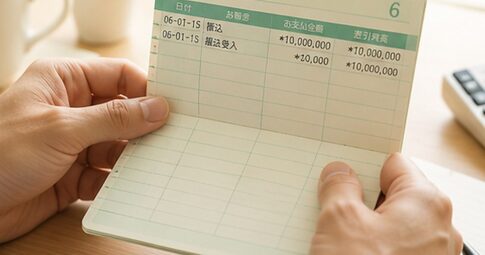
What is seized is not cash in the debtor’s hands but the debtor’s claim against the bank for repayment of the deposit. In the procedure the bank is the third-party obligor (daisan-saimusha). From the moment the order is served on it, the bank may no longer release the attached portion to the debtor, and the creditor may demand payment from the bank directly. A debtor who goes to the counter or to a cash machine after service will find that sum beyond reach.
How the procedure runs
- Obtain an enforceable title — a final judgment, a settlement record, a demand for payment carrying a declaration of provisional execution, or a notarial deed containing the debtor’s statement submitting to compulsory execution.
- Identify the third-party obligor — the application must state the name of the bank and the branch at which the account is held. The court will not investigate this for you.
- Apply for an attachment order against the claim, to the District Court for the debtor’s general venue. The filing fee is 4,000 yen, with postal charges paid in advance.
- The order issues without the debtor being heard, and is served first on the bank and only afterwards on the debtor. That sequence exists precisely so that the debtor cannot empty the account before it is frozen.
- Collection — one week after service on the debtor, the creditor may demand payment from the bank directly and receive the money itself.
- Notice requiring a statement — if applied for at the same time, the court clerk requires the bank to state, within two weeks of service, whether the deposit exists, its type and balance, and whether other attachments are in place. That is what tells you whether the attachment has struck anything.
Identifying the bank and the branch
Execution against claims requires the claim attached to be specified, so the application must as a rule name both the bank and the branch at which the deposit is held. Naming the bank alone and ranking all of its branches in some order — by branch number, for instance — has been held by the Supreme Court of Japan not to specify the claim attached, and such an application will not be granted.
Practice nevertheless varies from bank to bank. For the larger institutions, which can search their whole branch network centrally, some courts accept an application naming no branch where the bank has indicated that it can respond on that footing. Regional banks, credit unions and credit cooperatives generally still insist that the branch be named, so the current practice of the particular bank and court is worth confirming before applying.
Where the balance is unknown
Where you do not know whether the debtor has a deposit at all, or what it holds, the procedure for obtaining information from third parties is available. A creditor of a monetary claim who holds an enforceable title may ask the court to put an enquiry to a nominated bank, which must then report the type of deposit, its balance and the branch at which it is held. For deposit information this procedure need not be preceded by the property disclosure procedure and is open to an ordinary trade or loan creditor; it is at present the most effective means of investigation. The bank to be asked must still be nominated by the creditor.
There is also the bar association inquiry under article 23-2 of the Attorney Act of Japan, which may be used before any enforceable title has been obtained. A bank cannot be compelled to answer it, however, and in recent years many decline to do so. In practice one narrows the field first — from past remittance records, the account details written into contracts and the bankers named on the debtor’s own website — and only then deploys the procedures above.
What the attachment reaches, and why timing decides the case
The point most easily overlooked is that the attachment reaches only the balance standing in the account at the moment of service. Money paid in afterwards falls outside that order altogether. So even where the debtor receives a regular monthly payment, service on the day before it arrives may yield a few thousand yen and nothing more. This is the fundamental difference from attachment of wages, where the creditor may collect from each month’s salary as it falls due.
Timing is therefore everything. The debtor’s own trading pattern will usually suggest when money comes in and when it goes out; the application should be aimed at the point where the balance is fullest, allowing for the days the court needs to issue the order and effect service. A further application may be made later, but by then the debtor is alert and has commonly moved the money elsewhere. The first attempt is the one that matters.
Provisional attachment, and exempt income paid into an account
Provisional attachment (kari-sashiosae) freezes a deposit before any enforceable title exists. It requires no title, only a prima facie showing of the right to be preserved and of the necessity of preservation, but a security bond must be deposited with the Legal Affairs Bureau, and it does no more than forbid the bank to pay: the creditor cannot collect, and to be paid must still obtain a title and convert the measure into an attachment proper. The attachment described here, by contrast, presupposes a title, requires no security, and permits collection.
Wages, pensions and other income that the law exempts from attachment become, once paid into an account, an ordinary claim against the bank. Japanese practice treats such sums as having lost their exempt character and as attachable in principle. The debtor may nevertheless apply to vary the scope of the exemption and have the attachment set aside; and where an attachment follows immediately upon the credit, the money being unmixed with other funds and its source plain, lower courts have held the attachment to be an abuse of right. An account of that kind calls for careful thought.
In closing
Attachment of deposits is the swiftest of the enforcement measures and also the one that most often strikes nothing. The outcome rests on the single fact of what stood in the account on the day of service, so completing the investigation before the debtor takes fright, and then judging when to move, is what decides the matter. The investigation and the application can be conducted from outside Japan by email and video conference, and we are equally glad to work through the creditor’s own counsel.
How to contact us
Telephone 03-6435-8418 within Japan, or +81-3-6435-8418 from overseas. Lines are open from 08:00 to 21:00 Japan time, including Saturdays, Sundays and public holidays. Enquiries are also received at any hour through the form on this site.
M&A Partners Law Office LPC Katsuhiro Tsuchiya, Representative Attorney-at-Law (Tokyo Bar Association, Registration No. 26775) 17F Mori Trust Shiroyama Trust Tower, 4-3-1 Toranomon, Minato-ku, Tokyo, Japan
This article is a general explanation based on the laws and practice of Japan as at August 2026 (Reiwa 8). The outcome of any particular matter depends on its own facts, and no specific result is guaranteed.
If you are considering a consultation
The scope of our work on this subject, how a matter proceeds and how our fees are determined are set out on the page below.
お問い合わせ
この記事に関連するお問い合わせは、弁護士法人M&A総合法律事務所にいつにてもお問い合わせください。ご不明な点等ございましたら、いつにてもお問い合わせいただけましたら幸いです。
無料診断フォーム
こちらのフォームから、請求可能性や解決可能性に関する無料診断が可能です(ベータ版)。いくつかの質問に回答することによりご自身のご状況が分かります。ご活用ください。
弁護士法人M&A総合法律事務所メールマガジン

セミナー情報と書籍・電子書籍の謹呈