Where this page fits, and related pages
This page is one of a series on debt collection. For the overall picture, please see the central page below.
▶ Debt Collection in Japan|An Overview of Prescription, Procedures and Enforcement
Related pages on the same subject
- Competition by Employees and Former Employees in Japan|Non-Compete Covenants, Trade Secrets and the Remedies Available
- Execution Against Movables in Japan|What the Court Execution Officer Can Seize, and What He Cannot
- What a Bar Association Inquiry Can Obtain|Article 23-2 of the Attorney Act of Japan
- Attachment of Bank Deposits in Japan|Procedure, Tracing the Balance and Choosing the Moment
- Attaching Accounts Receivable in Japan|Method, Advantages and Drawbacks
- Recovering Accounts Receivable in Japan|Warning Signs, First Steps, the Order of Remedies and Prevention
- Interference with Trade and Business in Japan|Unfair Competition, Tort and the Remedies Available
A reconciliation shows that the bank balance and the ledger no longer agree. A customer telephones to say the invoice was settled weeks ago. An internal report names someone in the accounts department. Companies with a subsidiary or branch in Japan meet this more often than they expect, and the commonest mistake is also the most costly: putting the question to the individual before the evidence has been secured. What follows sets out the lawful steps open to the company as the injured party, under the law of Japan.
How it comes to light, and the first few days
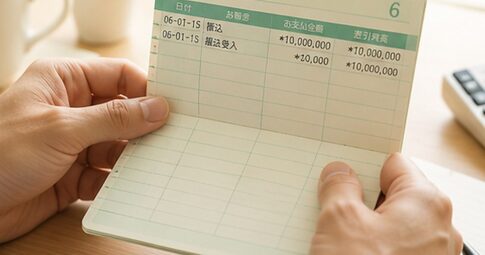
These matters usually surface in one of four ways — a discrepancy between the ledger and the bank balance, a query from a customer about a payment, an internal report, or a finding by internal audit or the accountants. In every case the materials and the electronic records should be secured before the individual is approached, because once the person knows an investigation is under way, ledgers, vouchers, correspondence and system logs are at risk of deletion or alteration. Secure first the accounting ledgers and vouchers, the passbooks and online banking statements, invoices and receipts, internal approval documents, email, system access logs, and a forensic image of any company-issued computer. Interviews should begin at the periphery — colleagues in the same section, the immediate superior, and where necessary the customer concerned — and reach the individual last.
There are limits to what may lawfully be examined. A company-issued computer and a company email account may generally be examined where the work rules give an express basis for it and the investigation is both necessary and proportionate in method. A personal mobile telephone, a private account or the contents of a personal locker are another matter, and searching them without consent may amount to an invasion of privacy. On searches of an employee’s belongings the Supreme Court of Japan has required reasonable grounds, a method and extent that are generally appropriate, uniform application as an established practice, and an express basis in the work rules or equivalent.
Establishing the facts
Four things must be established: the period, the amount, the type of method used, and whether anyone else was involved, including any outside supplier or customer. The method needs to be established only so far as is necessary to identify the loss and the cause of action. A schedule listing each item by date and amount, with the reference number of the supporting document against each entry, becomes the common foundation of the civil claim and of any criminal complaint. When the individual is interviewed a written record should be taken and signed, and if the conduct is admitted a written acknowledgement of the period and the amount should be obtained with a repayment schedule. A document extracted by threats or prolonged confinement is liable to be set aside later and puts the company itself in the wrong; the process must remain voluntary.
Recovering the money: the civil claims
- Unjust enrichment (futo ritoku) — Articles 703 and 704 of the Civil Code of Japan. A recipient in bad faith must restore the sum with interest.
- Damages in tort — Article 709 of the Civil Code. Beyond the principal, the costs of investigation may be recoverable so far as they are causally connected to the wrong.
- Prescription — a claim in tort is barred three years after the injured party learns of the loss and of the wrongdoer, or twenty years after the act; a claim in unjust enrichment, five years after the creditor learns that the right may be exercised, or ten years from the time it may be exercised.
- The guarantor of the employee’s conduct (mimoto hosho-nin) — under the Japanese Act on Guarantee of Employees, a guarantee with no stated term lasts three years and a stated term may not exceed five. The court may reduce the guarantor’s liability having regard to all the circumstances, including laxity in supervision, so full recovery from this source is uncommon. A personal revolving guarantee entered into on or after 1 April 2020 is void unless it states a maximum amount.
- Set-off against the retirement allowance (taishokukin) — the retirement allowance is wages, and Article 24 of the Labour Standards Act requires wages to be paid in full, so the employer cannot set off unilaterally. The Supreme Court has allowed set-off only where objective circumstances show that the employee consented of their own free will. A work rule providing for forfeiture on disciplinary dismissal is upheld only where the misconduct is grave enough to extinguish the merit of the employee’s past service.
- Provisional attachment (kari-sashiosae) — to prevent the assets from being dissipated, an application may be made before proceedings begin to attach bank deposits, immovables or vehicles. The right to be preserved and the necessity of preservation must be shown, and a security bond deposited with the Legal Affairs Bureau. Speed decides whether the step is worth taking at all.
The criminal complaint, and when to make it
Embezzlement in the course of business (gyomu-jo oryo) under Article 253 of the Penal Code of Japan carries imprisonment of up to ten years; since June 2025 the two former forms of imprisonment have been consolidated into a single penalty. The offence does not require a complaint by the victim, so a complaint is not a legal precondition to prosecution — but in practice whether the company files one weighs heavily on whether the police take the matter up.
The sequence deserves thought. Once a complaint is filed the individual may lose employment or be taken into custody, and with that any means of repaying. Against this, restitution and settlement carry real weight in sentencing, so a complaint may itself prompt the individual and the family to find the money. Whether to secure an acknowledgement and some security first and file afterwards, or to file at once, is a judgment on the particular facts. Where the sum is large, where there is a risk of flight or of destruction of evidence, or where the individual denies everything, filing early is usually the better course.
The disciplinary side
A disciplinary measure must rest on grounds and categories set out in the work rules, and those rules must have been made known to the workforce. The measure must also be proportionate to the nature and gravity of the conduct; anything beyond that is an abuse of the disciplinary power and void under Article 15 of the Labour Contracts Act. Procedurally the individual must be given an opportunity to be heard, and even where the facts are plain the absence of that step alone can invalidate the measure. A disciplinary dismissal must in addition have objectively reasonable grounds and be appropriate in general social terms under Article 16 of the same Act, the relevant factors including the amount and the period, whether there is contrition, whether restitution has been made, and the effect on the business. If the company dismisses without notice it must obtain the approval of the head of the Labour Standards Inspection Office under Article 20 of the Labour Standards Act; without it, thirty days’ pay in lieu of notice remains due. The same conduct may not be punished twice.
Preventing a recurrence
- Segregation of duties — bookkeeping separated from custody of funds, and invoicing separated from receipt of payment.
- Dual approval — expenditure above a set threshold approved by two people, and online banking operated on a two-person basis.
- Rotation and compulsory continuous leave — one person handling a particular function alone for years is precisely the condition in which wrongdoing goes undetected.
- Independent reconciliation — the periodic check of bank balance against ledger carried out by someone other than the person who keeps it.
- An internal reporting channel — under the Japanese Whistleblower Protection Act, an employer with more than three hundred workers in regular employment must put in place a system for handling internal reports, and detrimental treatment of the person reporting is prohibited.
In closing
These cases are largely won or lost in the first few days. The company’s object is normally recovery of the loss, with the criminal process no more than one means to that end, so the civil, criminal and employment steps should be sequenced as a single plan rather than taken as they occur to one. We act for foreign companies with operations in Japan, and are equally glad to work through the company’s own counsel abroad.
How to contact us
Telephone 03-6435-8418 within Japan, or +81-3-6435-8418 from overseas. Lines are open from 08:00 to 21:00 Japan time, including Saturdays, Sundays and public holidays. Enquiries are also received at any hour through the form on this site.
M&A Partners Law Office LPC Katsuhiro Tsuchiya, Representative Attorney-at-Law (Tokyo Bar Association, Registration No. 26775) 17F Mori Trust Shiroyama Trust Tower, 4-3-1 Toranomon, Minato-ku, Tokyo, Japan
This article is a general explanation based on the laws and practice of Japan as at August 2026 (Reiwa 8). The outcome of any particular matter depends on its own facts, and no specific result is guaranteed.
If you are considering a consultation
The scope of our work on this subject, how a matter proceeds and how our fees are determined are set out on the page below.
お問い合わせ
この記事に関連するお問い合わせは、弁護士法人M&A総合法律事務所にいつにてもお問い合わせください。ご不明な点等ございましたら、いつにてもお問い合わせいただけましたら幸いです。
無料診断フォーム
こちらのフォームから、請求可能性や解決可能性に関する無料診断が可能です(ベータ版)。いくつかの質問に回答することによりご自身のご状況が分かります。ご活用ください。
弁護士法人M&A総合法律事務所メールマガジン

セミナー情報と書籍・電子書籍の謹呈