Where this page fits, and related pages
This page is one of a series on debt collection. For the overall picture, please see the central page below.
▶ Debt Collection in Japan|An Overview of Prescription, Procedures and Enforcement
Related pages on the same subject
- When the Other Side Produces a Document You Say Is Forged|Challenging the Authenticity of Documentary Evidence in Japan
- Employee Embezzlement in Japan|Securing the Evidence, Recovering the Loss and Handling the Dismissal
- Competition by Employees and Former Employees in Japan|Non-Compete Covenants, Trade Secrets and the Remedies Available
- Execution Against Movables in Japan|What the Court Execution Officer Can Seize, and What He Cannot
- What a Bar Association Inquiry Can Obtain|Article 23-2 of the Attorney Act of Japan
- Attachment of Bank Deposits in Japan|Procedure, Tracing the Balance and Choosing the Moment
- Attaching Accounts Receivable in Japan|Method, Advantages and Drawbacks
When the other party fails to pay, which method of debt recovery is effective? This article explains, under Japanese law, the process for recovering claims, accounts receivable and rent arrears.
1. Demand by notice, warning letter and content-certified mail
The usual first step is to demand payment by telephone or in a meeting, and then to send a demand by content-certified mail (naiyo-shomei yubin), a Japanese postal service that certifies the content of a letter and the date on which it was sent.
A demand issued in the name of a lawyer often prompts payment. Entrusting the demand to a lawyer also relieves the creditor of the time and stress involved.
Where payment is still not made, legal proceedings become necessary.
2. Provisional attachment and other provisional remedies
Where the other party holds assets, it is advisable to apply for a provisional attachment (kari-sashiosae) or other provisional remedy before commencing the main action, so as to secure assets from which payment can be obtained.
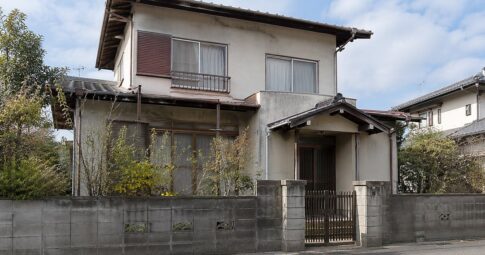
Real property is commonly the subject of a provisional attachment. However, where a mortgage has already been registered over that property and no residual value remains, no recoverable asset has in fact been secured.
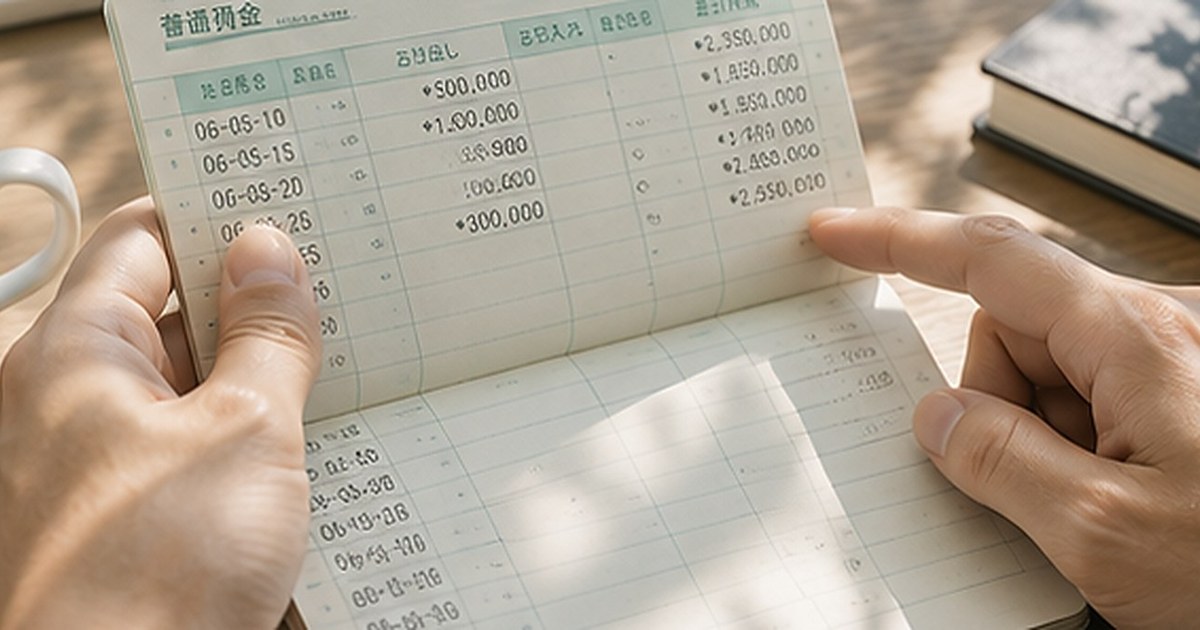
Bank deposits may also be attached. It is not unusual to apply simultaneously against several dozen banks and post offices at which the debtor may hold an account. Where the debtor is a company, the attachment of its deposits or receivables will affect its business, and it is not uncommon for payment to be made at this stage.
Because a provisional attachment has the very strong effect of preventing the debtor from disposing of its assets, the court will ordinarily require a security bond, generally in the order of 20 to 30 per cent of the amount claimed, to be deposited with the Legal Affairs Bureau.
Once all proceedings have concluded, an application may be made to the court for the return of that security.
3. Recovery through litigation
Where payment is not made despite a notice, a warning letter, content-certified mail or a provisional attachment, the matter proceeds to litigation.
If the other party appears and discussion is possible, the claim is generally resolved by settlement.
If the other party does not appear, or refuses to settle, the court will render a judgment.
Once judgment has been given, the other party may pay, or may appeal.
Compulsory execution may be levied against the other party’s assets not only where the judgment has become final, but also, notwithstanding an appeal, where the judgment carries a declaration of provisional execution.
4. Recovery through compulsory execution
Where judgment has been given but the other party does not pay voluntarily, or where rent is unpaid and the tenant does not vacate voluntarily, compulsory execution is required.
Execution requires that the debtor’s assets first be investigated and the subject of execution identified.
An application must be made to the court. Where the debtor holds few assets — for example, where a deposit is attached but the balance proves to be small — the costs may exceed the amount recovered. A careful assessment of cost-effectiveness is therefore required.
5. Conclusion
In selecting a method of recovery, the advantages and disadvantages of each course must be weighed together.
Our firm handles debt recovery in Japan, with a particular focus on loan receivables, share transfer price, investment funds and damages. We welcome enquiries from creditors holding claims against parties in Japan.
How to contact us
Telephone 03-6435-8418 within Japan, or +81-3-6435-8418 from overseas. Lines are open from 08:00 to 21:00 Japan time, including Saturdays, Sundays and public holidays. Enquiries are also received at any hour through the form on this site.
M&A Partners Law Office LPC Katsuhiro Tsuchiya, Representative Attorney-at-Law (Tokyo Bar Association, Registration No. 26775) 17F Mori Trust Shiroyama Trust Tower, 4-3-1 Toranomon, Minato-ku, Tokyo, Japan
This article is a general explanation based on the laws and practice of Japan as at August 2026 (Reiwa 8). The outcome of any particular matter depends on its own facts, and no specific result is guaranteed.
If you are considering a consultation
The scope of our work on this subject, how a matter proceeds and how our fees are determined are set out on the page below.
お問い合わせ
この記事に関連するお問い合わせは、弁護士法人M&A総合法律事務所にいつにてもお問い合わせください。ご不明な点等ございましたら、いつにてもお問い合わせいただけましたら幸いです。
無料診断フォーム
こちらのフォームから、請求可能性や解決可能性に関する無料診断が可能です(ベータ版)。いくつかの質問に回答することによりご自身のご状況が分かります。ご活用ください。
弁護士法人M&A総合法律事務所メールマガジン

セミナー情報と書籍・電子書籍の謹呈